
Heart blockage does not always mean that you need surgery. In some cases, medicines, healthier lifestyle habits, and proper control of cholesterol, blood pressure, and diabetes can help slow down plaque buildup and may even reduce it over time. So, whether heart blockage can be reversed without surgery depends on the severity and location of the blockage and how it affects blood flow. If the blockage is severe, angioplasty or bypass surgery may still be the safest option.
What Does “Heart Blockage” Actually Mean?
When people say “heart blockage,” they usually mean narrowing in one or more coronary arteries. These arteries supply oxygen-rich blood to the heart muscle.
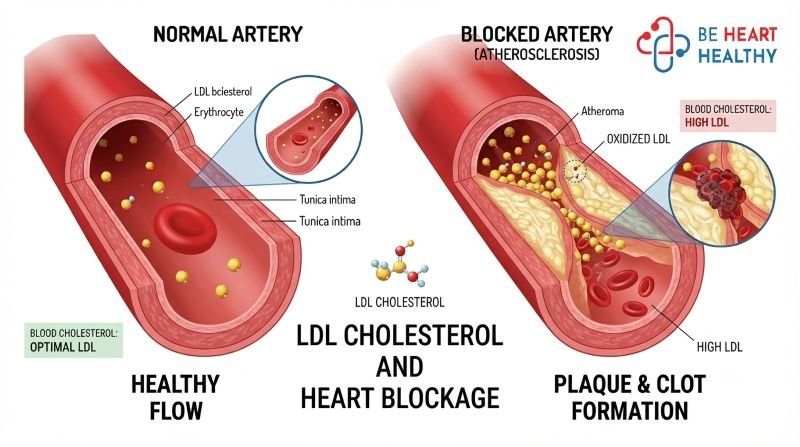
The narrowing usually develops because of atherosclerosis, a process in which cholesterol, inflammatory cells, calcium and other substances accumulate within the artery wall and form plaque.
Over time, plaque can become large enough to restrict blood flow. A plaque can also rupture and trigger a blood clot, potentially causing a heart attack.
Not every blockage behaves in the same way. A person with a mild, stable narrowing may have a very different treatment plan from someone with a severe narrowing that significantly limits blood flow.
That is why the percentage of blockage alone does not tell me everything I need to know.
Symptoms, plaque characteristics, the location of the narrowing, heart function, exercise tolerance and your overall cardiovascular risk all matter.
For a broader explanation of diagnosis and treatment, you can read our guide to coronary artery disease treatment.
Can Heart Blockage Be Reversed Naturally?
This is where I want to make an important distinction.
Lifestyle changes and medical treatment can slow or stabilise atherosclerosis and reduce cardiovascular risk. With intensive risk-factor management, some patients may also experience regression of plaque. But this does not mean that every established blockage will disappear.
If an artery has a severe fixed narrowing, depending only on diet or exercise can be unsafe.
The goal of treatment is usually to:
- Reduce the risk of heart attack
- Prevent plaque from progressing
- Stabilise vulnerable plaque
- Improve symptoms
- Improve blood flow when necessary
- Control cholesterol, blood pressure and diabetes
- Help you maintain long-term heart health
Current chronic coronary disease guidance recommends healthy dietary habits and physical activity for patients with coronary disease, while statins remain a first-line treatment for lipid lowering.
When Can Lifestyle Changes Make a Difference?
Lifestyle changes are particularly important when coronary disease is early, stable or accompanied by modifiable risk factors.
Important measures include:
- Eating a heart-healthy diet
- Maintaining a healthy weight
- Exercising according to your cardiovascular condition
- Stopping smoking and tobacco use
- Controlling diabetes
- Managing blood pressure
- Reducing unhealthy saturated-fat intake
- Taking prescribed cholesterol-lowering medicines consistently
- Getting appropriate follow-up testing
These measures do not provide an overnight solution. They work by addressing the factors that contribute to plaque formation and cardiovascular risk over the long term.

Cholesterol Treatment Mumbai: Why LDL Control Matters
Cholesterol treatment Mumbai patients receive should be based on their overall cardiovascular risk, not simply on whether their cholesterol report falls within a laboratory’s general reference range. If you have coronary artery disease or significant risk factors, controlling LDL cholesterol becomes an important part of protecting your arteries.
LDL cholesterol contributes to the development and progression of atherosclerotic plaque. Lowering LDL-C can help reduce cardiovascular risk and, in some patients, intensive cholesterol management may contribute to plaque stabilisation or regression.
How Is LDL Cholesterol Controlled?
LDL cholesterol control usually involves a combination of lifestyle measures and, when indicated, medication. The exact approach depends on your LDL-C level, medical history and cardiovascular risk.
Important measures include:
- Eating a diet rich in vegetables, fruits, whole grains, pulses and nuts
- Reducing foods high in saturated and trans fats
- Maintaining a healthy body weight
- Exercising regularly at an appropriate intensity
- Avoiding smoking and tobacco
- Managing diabetes and blood pressure
- Taking prescribed cholesterol-lowering medicines consistently
Depending on your risk profile, your cardiologist may recommend statins or other lipid-lowering medicines such as ezetimibe or PCSK9-targeting therapies.
If you already have coronary artery disease, I would not recommend relying on diet alone without assessing your LDL-C and overall cardiovascular risk. Effective LDL cholesterol control can be an important part of preventing plaque progression and reducing the chance of future cardiovascular events.
What Is the Role of Coronary Artery Disease Treatment?
The right coronary artery disease treatment depends on what the blockage is doing, not simply on the fact that a scan has shown a narrowing.
A cardiologist may consider:
Medical Treatment
If the disease is stable and does not require immediate revascularisation, medication can play an important role.
Depending on the patient’s condition, treatment may include medicines that:
- Lower LDL cholesterol
- Reduce the risk of blood clots
- Control blood pressure
- Reduce angina symptoms
- Manage diabetes and other cardiovascular risk factors
Medical treatment is not “doing nothing.” For many patients, it is an active and evidence-based part of managing coronary disease.
Lifestyle Management
Lifestyle management works alongside medication rather than replacing necessary medical treatment.
I usually look at several areas together:
- Diet: Focus on vegetables, fruits, whole grains, pulses, nuts and other minimally processed foods while limiting foods high in saturated fat, trans fat, excess salt and added sugars.
- Physical activity: Exercise can improve cardiovascular fitness and several risk factors, but the type and intensity should match your condition. Someone with significant or unstable symptoms should not begin strenuous exercise without medical assessment.
- Smoking: Stopping smoking is one of the most important steps you can take for cardiovascular health.
- Weight: If you are overweight, gradual and sustainable weight reduction can improve several cardiovascular risk factors.
- Diabetes and blood pressure: Good control of these conditions can reduce additional stress on the cardiovascular system.
Angioplasty and Stent Treatment
If a significant narrowing is restricting blood flow and causing symptoms or creating a high-risk situation, angioplasty may be appropriate.
During coronary angioplasty, physicians use a catheter to reach the narrowed artery. A balloon can widen the narrowed area, and doctors may place a stent to help keep the artery open.
A stent does not remove all of the underlying atherosclerosis. It treats a specific obstructive lesion while long-term medical and lifestyle management remains important.
Bypass Surgery
Some patients have complex, extensive or multiple coronary blockages where bypass surgery may provide a better treatment strategy.
The choice between medication, angioplasty and bypass surgery should be based on the patient’s anatomy, symptoms, heart function, other medical conditions and overall risk.
The current chronic coronary disease guideline emphasises individualised assessment and shared decision-making when considering revascularisation.

How Do Doctors Know Whether a Blockage Can Be Managed Without Surgery?
This is one of the most important questions.
I do not decide treatment simply by looking at a number such as “70% blockage.”
I first want to understand:
- Where is the blockage?
- How severe is it?
- Is it affecting blood flow?
- Are you experiencing chest pain or breathlessness?
- Do symptoms occur during exercise or at rest?
- What does your ECG show?
- How is your heart pumping?
- Do you have diabetes or high blood pressure?
- What is your LDL-C level?
- Do you smoke?
- Do you have a history of heart attack or previous angioplasty?
- Are there multiple blocked arteries?
Depending on your symptoms and risk profile, investigations may include an ECG, echocardiogram, stress testing, CT coronary angiography or invasive coronary angiography.
Our coronary artery disease and angiography guide explains how these investigations help doctors assess coronary artery disease.
Dr. Ankur Phatarpekar Clinical Perspective
When patients ask me, ‘Can heart blockage be reversed without surgery?’, I understand why they want a simple yes or no.
But in cardiology, the safest answer depends on the individual patient.
If I find early or stable coronary disease, my approach is not automatically to send the patient for a procedure. I first look at the complete clinical picture. If medication, cholesterol reduction, lifestyle changes, and risk-factor control can safely manage the disease, that can be a very reasonable treatment strategy.

At the same time, I do not want a patient with a severe or clinically significant blockage to delay necessary treatment because they believe diet or supplements will remove the blockage.
There is a difference between controlling the disease and mechanically opening a severely narrowed artery.
I also pay close attention to LDL cholesterol. In a patient with established coronary disease, achieving appropriate lipid control can be a major part of reducing future cardiovascular risk. Current guidelines continue to place statins and other evidence-based lipid-lowering therapies at the centre of cardiovascular risk reduction.
My aim is to recommend a treatment plan that matches your actual level of risk. Depending on your symptoms, test results and the severity of the disease, that may involve medication and lifestyle changes, angioplasty, or, when appropriate, bypass surgery.
The important thing is not to choose the least invasive treatment at any cost. It is to choose the safest treatment that adequately addresses your heart disease.
When Should You See a Cardiologist?
You should arrange a cardiovascular evaluation if you repeatedly experience:
- Chest pressure or discomfort
- Breathlessness during exertion
- Unexplained reduction in exercise capacity
- Unusual fatigue
- Pain spreading to the arm, shoulder, jaw, neck or back
- Dizziness or sweating associated with chest discomfort
If chest discomfort is severe, persistent or associated with breathlessness, sweating, fainting or other concerning symptoms, seek emergency medical care rather than waiting for a routine appointment.
A cardiologist can determine whether the symptoms are related to coronary artery disease or another condition.
Frequently Asked Questions About Reversing Heart Blockage
Patients often ask whether diet, exercise and cholesterol management can replace angioplasty or surgery. The answer depends on the severity and clinical significance of the coronary disease.
Q. Heart blockage can be reversed without surgery?
In some patients, early or stable coronary artery disease can be managed without surgery through medication, lifestyle changes and aggressive risk-factor control. However, a severe fixed blockage may require angioplasty or bypass surgery. Heart blockage can be reversed without surgery completely depending on the extent and nature of the plaque and the patient’s overall cardiovascular condition.
Q. Can cholesterol medication reduce heart blockage?
Cholesterol-lowering treatment can reduce LDL-C and lower cardiovascular risk. Intensive lipid-lowering therapy may also contribute to plaque stabilisation and, in some patients, plaque regression. However, medication should not be considered a guaranteed way to eliminate an established severe blockage.
Q. What is the best coronary artery disease treatment?
There is no single best treatment for every patient. Coronary artery disease treatment may include lifestyle changes, medications, angioplasty with stenting or bypass surgery. The appropriate option depends on symptoms, coronary anatomy, heart function and overall cardiovascular risk.
Q. Can exercise remove heart blockage?
Exercise does not mechanically remove a severe coronary blockage. However, appropriately prescribed physical activity can improve cardiovascular fitness and help manage several risk factors. People with significant or unstable symptoms should undergo medical assessment before starting strenuous exercise.
Q. How can I control LDL cholesterol naturally?
A heart-healthy diet, regular physical activity, maintaining a healthy weight and avoiding tobacco can help improve cardiovascular risk factors. However, people with established coronary artery disease may need medication in addition to lifestyle measures. LDL cholesterol control should be individualised according to cardiovascular risk rather than managed through diet alone.
Q. Can a 70% heart blockage be treated without surgery?
The percentage alone does not determine the treatment. A 70% narrowing in one location may be managed differently from a similar narrowing in another artery. Symptoms, blood-flow limitation, plaque characteristics, other blockages and overall health all influence the decision. A cardiologist should evaluate the complete clinical picture before deciding whether medication, angioplasty or bypass surgery is appropriate.
Q. Should I avoid angioplasty if I want to reverse my blockage naturally?
Not necessarily. If a blockage is causing significant symptoms or poses a substantial risk, delaying recommended treatment in the hope that lifestyle changes alone will reverse it can be unsafe. Lifestyle and medical management remain important even when angioplasty or surgery is required.
Speak With Dr. Ankur Phatarpekar at Be Heart Healthy
If you have been told that you have a heart blockage, you do not need to make a treatment decision based on the blockage percentage alone.
I would first want to understand your symptoms, reports, cholesterol levels, medical history and the actual effect of the blockage on blood flow. From there, we can discuss whether medical management, further testing, angioplasty or another approach makes sense for you.
If you are considering a second opinion, I am also happy to review your existing cardiac reports and help you understand the reasoning behind the treatment recommendation. At Be Heart Healthy, my focus is to help you understand your options clearly so you can make an informed decision about your care.
Phone: +91 88284-73147
Email: careforyourheart.in@gmail.com
Address: A12 Silver Apts, Shankar Ghanekar Marg, Prabhadevi, Mumbai 400025, Maharashtra, India
Reviewed by: Dr. Ankur Phatarpekar
Interventional Cardiologist & Structural Heart Specialist
This article is intended for general patient education and does not replace an individual medical evaluation. Treatment decisions should be made after reviewing your symptoms, investigations and overall cardiovascular risk.