
Summary: This article explains the often subtle coronary artery disease symptoms in women, including unusual fatigue, shortness of breath, nausea, dizziness, and discomfort beyond the chest. It also covers when to seek cardiac evaluation, how coronary artery disease is diagnosed, and the available treatment options.
Coronary artery disease symptoms in women can be subtle and may not always feel like classic chest pain. Women may experience chest pressure, shortness of breath, unusual fatigue, nausea, dizziness, or discomfort in the back, jaw, neck, shoulder, arm, or upper abdomen. Recognizing these changes early can help you seek appropriate medical evaluation.
Women can develop coronary artery disease at any age, and the symptoms do not always follow the pattern many of us have learned from heart-health discussions. The most important point is not to dismiss a new or unexplained symptom simply because it does not feel like severe chest pain.
The American Heart Association and National Heart, Lung, and Blood Institute both highlight that women can experience heart-related symptoms such as shortness of breath, nausea, unusual tiredness, dizziness, and pain or pressure in areas such as the back, jaw, shoulder, or arm.
Why Coronary Artery Disease Can Look Different in Women
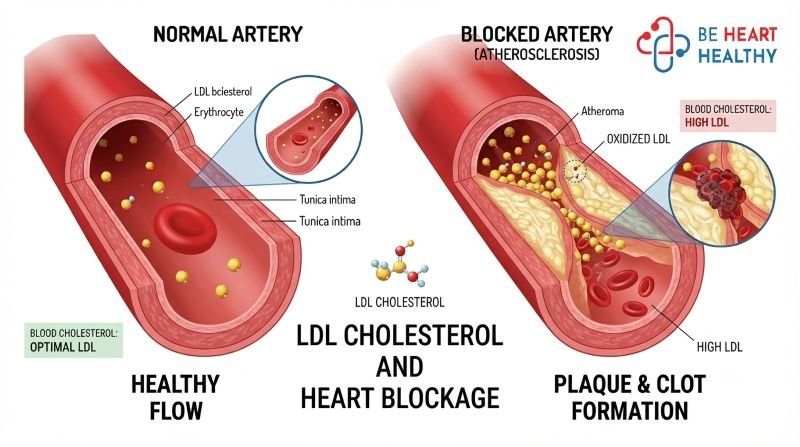
Coronary artery disease develops when plaque builds up inside the coronary arteries and reduces blood flow to the heart muscle. Symptoms often become noticeable when the heart needs more oxygen, such as during exercise, climbing stairs, emotional stress, or other physical activity.
However, women may experience symptoms that are less obviously connected to the heart. For example, persistent tiredness or breathlessness may be attributed to work, poor sleep, stress, menopause, acidity, or simply getting older.
That assumption can delay evaluation.
Women can also experience angina with discomfort in the arms, neck, back, or jaw rather than obvious central chest pain. Nausea, light-headedness, and shortness of breath may occur alongside or even without prominent chest discomfort.
This does not mean every episode of fatigue, acidity, or back pain indicates a heart problem. It means that a new, persistent, recurring, or unexplained symptom deserves appropriate medical attention, particularly when cardiovascular risk factors are present.
The Silent Signs Women Should Not Ignore
Some of the most important warning signs can appear mild at first. Pay attention to symptoms that are new, occur repeatedly, become worse with exertion, or appear together.
Chest pressure or discomfort
Chest discomfort remains one of the most common symptoms of coronary disease and heart attack in both women and men.
You may describe it as:
- Pressure or heaviness
- Tightness
- Squeezing
- Burning
- Fullness
- Mild discomfort rather than severe pain
The absence of dramatic chest pain does not automatically rule out a cardiac problem.
Unusual tiredness
Unexplained fatigue can be easy to overlook, particularly when you have a demanding routine.
If ordinary activities suddenly leave you unusually exhausted, or if you notice a significant reduction in your ability to exercise or perform routine tasks, it is worth discussing with a doctor.
Unusual tiredness and weakness are among the symptoms reported more frequently by women experiencing acute coronary syndromes.
Shortness of breath
Breathlessness can occur with or without chest discomfort.
You might notice that climbing stairs, walking your usual distance, or completing normal household activities suddenly feels harder than before.
Although many conditions can cause breathlessness, unexplained or new symptoms should not be automatically attributed to fitness, anxiety, or age.
Back, shoulder, neck, jaw, or arm discomfort
Heart-related discomfort does not always remain in the chest.
Women may experience discomfort in the:
- Upper back
- Shoulder
- One or both arms
- Neck
- Jaw
- Upper abdomen
These symptoms can occur with chest discomfort or independently.
Nausea, indigestion, or stomach discomfort
Some women mistake heart-related symptoms for acidity or indigestion.
Nausea, stomach discomfort, vomiting, or an unusual feeling of indigestion can accompany a heart attack.
If these symptoms appear together with breathlessness, sweating, chest pressure, weakness, or pain elsewhere in the upper body, do not assume that the cause is digestive.
Dizziness or light-headedness
Feeling unusually light-headed, weak, or close to fainting can have many causes. But when these symptoms appear alongside chest discomfort, breathlessness, sweating, nausea, or unusual weakness, they require prompt medical assessment.
Cold sweating or a feeling that something is wrong
Sudden cold sweating, anxiety, weakness, or a vague sense that something is not right can accompany acute coronary symptoms in women. The American Heart Association specifically lists cold sweat, nausea, light-headedness, unusual tiredness, and anxiety among possible symptoms.
You do not need to wait until several symptoms appear before seeking help.
When to See an Interventional Cardiologist in Mumbai

If you have recurring chest discomfort, unexplained breathlessness, reduced exercise tolerance, or unusual symptoms that could be cardiac, a cardiovascular assessment can help determine whether further testing is necessary.
An interventional cardiologist in Mumbai can assess your symptoms alongside your medical history, blood pressure, cholesterol, diabetes status, family history, ECG findings, and other relevant factors.
Depending on your symptoms and risk profile, your evaluation may include:
- Electrocardiogram (ECG)
- Echocardiography
- Blood tests
- Stress testing
- CT coronary angiography
- Coronary angiography
The appropriate test depends on the individual patient. A test should answer a clinical question rather than simply be performed because it is available.
Women also deserve a careful assessment when symptoms do not fit the traditional picture of coronary disease. The American Heart Association’s 2026 guidance on acute coronary syndromes in premenopausal women highlights symptoms such as back, shoulder, chest, neck and jaw discomfort, gastrointestinal symptoms, fatigue, dizziness, anxiety, and subtle feelings that something is wrong.
How Is Coronary Artery Disease Diagnosed in Women?
Diagnosis starts with understanding the symptom rather than immediately deciding on a procedure.
I look at several factors together:
Your symptoms and their pattern
When did the symptom begin? Does it occur during exertion or at rest? How long does it last? Does it improve with rest? Has the pattern changed?
These details can provide important clinical clues.
Your cardiovascular risk factors
Risk factors may include:
- High blood pressure
- Diabetes
- High cholesterol
- Smoking
- Obesity
- Physical inactivity
- Family history of heart disease
- Previous pregnancy-related conditions such as preeclampsia
- Other medical conditions that increase cardiovascular risk
Risk factors can affect women differently, and some women can develop serious coronary problems without having an obvious collection of traditional risk factors.
Appropriate cardiac testing
Depending on your situation, your doctor may recommend non-invasive testing first. If there is a strong indication of significant coronary disease, coronary angiography may provide detailed information about the location and severity of blockages.
The goal is not simply to find a blockage. The goal is to understand whether that blockage explains your symptoms and whether treatment can improve your health and long-term outlook.
Coronary Artery Treatment: Does Every Blockage Need a Stent?
No. Finding a coronary artery narrowing does not automatically mean that you need angioplasty or a stent.
The appropriate coronary artery treatment depends on factors such as the severity and location of the blockage, symptoms, heart function, other medical conditions, and overall cardiovascular risk.
Treatment may include:
Lifestyle modification
Cholesterol-lowering medication
Blood pressure and diabetes management
Medicines for angina when appropriate
Coronary angioplasty with stent placement
Coronary artery bypass surgery for selected complex disease
For some patients with stable coronary disease, medication and lifestyle management may be the most appropriate approach. For others, revascularisation may be necessary.
When Angioplasty May Be Considered
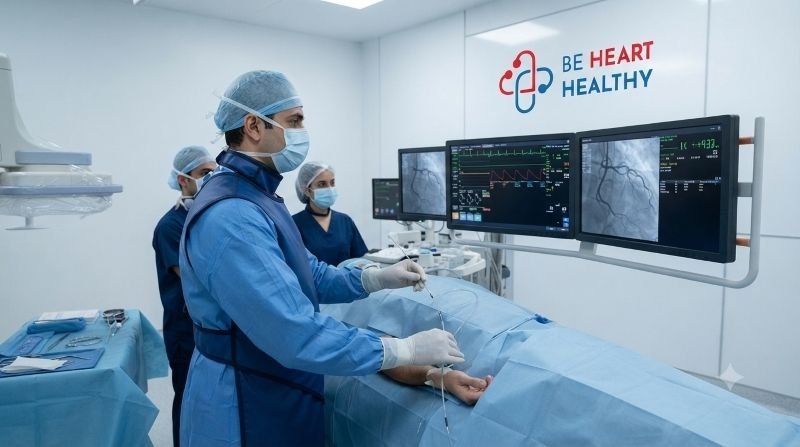
Coronary angioplasty can open a significantly narrowed or blocked coronary artery using a catheter-based approach. A balloon may widen the narrowed segment, and a stent is commonly placed to help keep the artery open.
The decision should be based on your individual coronary anatomy and clinical situation rather than the presence of a blockage alone.
Understanding Angioplasty Procedure Time
Patients often ask about angioplasty procedure time because they want to know what the experience will be like.
A straightforward coronary angioplasty may take around 30 minutes to two hours, but the actual duration varies considerably depending on the number, location, and complexity of the blockages and whether additional techniques are required.
A longer procedure does not necessarily mean something has gone wrong. Complex coronary anatomy may simply require more detailed imaging or additional treatment.
You can learn more about the procedure and recovery in our guide to coronary angioplasty.
Dr. Ankur Phatarpekar Clinical Perspective
When a woman tells me, “I don’t really have chest pain, but I have been unusually tired and breathless,” I do not dismiss those symptoms simply because they are not classic.
I first try to understand the pattern. Does the breathlessness happen while walking? Has her exercise capacity changed? Does the discomfort occur during emotional or physical stress? Are there associated symptoms such as nausea, sweating, dizziness, jaw or back discomfort?
I also consider her age, blood pressure, diabetes, cholesterol, smoking history, family history and other relevant risk factors.
My approach is to avoid both extremes: I do not want to alarm a patient unnecessarily, but I also do not want a potentially important cardiac symptom to be explained away without proper assessment.
If testing identifies coronary artery disease, I explain what the findings actually mean. A blockage on an angiogram is one part of the clinical picture. We need to consider whether it is responsible for the symptoms, how significant it is, and whether medication, lifestyle measures, angioplasty, or bypass surgery offers the most appropriate strategy.
For women in particular, listening carefully to the symptom pattern is an important part of good cardiac care.
When Symptoms Become an Emergency
Some symptoms require immediate emergency medical attention.
Seek emergency help if you experience new or persistent chest pressure or pain, particularly when it is accompanied by:
- Shortness of breath
- Cold sweating
- Nausea or vomiting
- Severe weakness
- Dizziness or fainting
- Pain spreading to the arm, shoulder, back, neck, or jaw
- Symptoms that occur at rest or do not settle
A heart attack can begin with mild or atypical symptoms, and women may experience symptoms without prominent chest pain.
Do not drive yourself if you think you may be having a heart attack. Seek emergency medical assistance immediately.
Frequently Asked Questions About Coronary Artery Disease Symptoms in Women
Women often search for answers when symptoms feel unusual or difficult to explain. These are some of the questions I commonly hear.
Q. Can coronary artery disease symptoms in women occur without chest pain?
Yes. Women can experience shortness of breath, unusual fatigue, nausea, dizziness, or discomfort in the back, shoulder, arm, neck, or jaw with or without obvious chest pain.
Q. Can unusual tiredness be a sign of a heart problem in women?
It can be. Unusual tiredness and weakness can occur with acute coronary symptoms in women. However, fatigue has many possible causes, so a proper clinical assessment is needed rather than assuming it is caused by coronary disease.
Q. How do doctors diagnose coronary artery disease in women?
Doctors combine your symptoms, medical history, cardiovascular risk factors, examination and appropriate tests. Depending on the situation, testing may include an ECG, echocardiogram, stress testing, CT coronary angiography, or invasive coronary angiography.
Q. Does every woman with a coronary blockage need coronary artery treatment?
No. Treatment depends on the severity and location of the narrowing, symptoms, heart function and overall health. Some patients benefit from medication and lifestyle management, while others may need angioplasty or bypass surgery.
Q. How long does an angioplasty procedure take?
The angioplasty procedure time varies according to the complexity of the coronary disease. A straightforward procedure may take around 30 minutes to two hours, while complex cases can take longer.
Q. When should a woman see an interventional cardiologist in Mumbai?
Consider cardiac evaluation for recurring or unexplained chest discomfort, breathlessness, reduced exercise tolerance, or symptoms involving the jaw, back, shoulder or arm, especially when cardiovascular risk factors are present. New or severe symptoms that could indicate a heart attack require emergency care rather than waiting for a routine consultation.
Speak With Dr. Ankur Phatarpekar at Be Heart Healthy
If you have symptoms that concern you, you do not need to decide on your own whether they are related to your heart. My role is to listen to the complete picture, assess your cardiovascular risk, review the appropriate investigations, and explain what the findings mean for you.
At Be Heart Healthy, I believe that understanding your symptoms is the first step toward making the right decision about your heart. If you are experiencing unusual fatigue, breathlessness, chest discomfort, or other symptoms that concern you, I can help assess whether they may be related to coronary artery disease and explain what evaluation may be appropriate.
Phone: +91 88284-73147
Email: careforyourheart.in@gmail.com
Address: A12 Silver Apts, Shankar Ghanekar Marg, Prabhadevi, Mumbai 400025, Maharashtra, India
About Dr. Ankur Phatarpekar
Dr. Ankur Phatarpekar is an Interventional Cardiologist and Structural Heart Specialist in Mumbai. His clinical practice includes coronary interventions, complex angioplasty, angiography, OCT, rotablation and structural heart procedures.
His approach is centred on understanding the patient’s condition, explaining treatment choices clearly, and selecting an appropriate strategy based on individual clinical needs.
Medical information disclaimer: This article is intended for patient education and does not replace an examination or individual medical advice. If you have symptoms suggestive of a heart attack, seek emergency medical care immediately.