
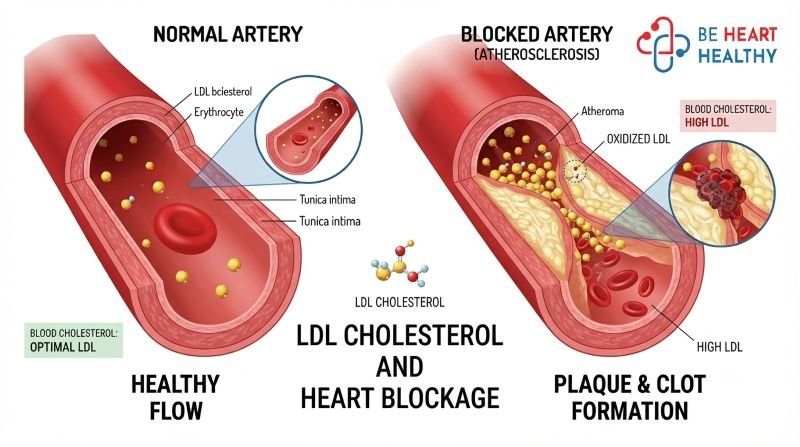
LDL cholesterol level matters because higher LDL-C can contribute to plaque buildup inside the coronary arteries and increase cardiovascular risk. However, there is no single LDL number that is equally dangerous for everyone. Age, diabetes, blood pressure, smoking history, family history, existing coronary artery disease and previous heart events all influence the LDL target a cardiologist may recommend.
If someone has already been diagnosed with heart blockage or coronary artery disease, simply checking whether cholesterol is “within the normal range” may not be enough. The LDL goal may need to be considerably lower depending on the person’s overall cardiovascular risk.
What Is LDL Cholesterol and Why Does It Matter?
LDL stands for low-density lipoprotein. It is commonly called “bad cholesterol” because elevated LDL-C can contribute to atherosclerosis, the process in which cholesterol and other substances accumulate within artery walls and form plaque.
Over time, plaque can narrow the coronary arteries that supply blood to the heart. A plaque can also become unstable and contribute to the formation of a blood clot.
This is why LDL cholesterol and heart blockage are closely connected.
Total cholesterol alone does not tell the complete story. A cardiologist also considers LDL-C, HDL-C, triglycerides, other cardiovascular risk factors and whether the patient already has established coronary artery disease.
Patients who want to understand the broader relationship between cholesterol and blocked arteries can also read the guide on heart blockage can be reversed.
What LDL Cholesterol Level Is Dangerous for Your Heart?
There is no universal LDL-C number that automatically means a person will develop a heart attack. Risk increases as LDL exposure increases, but the appropriate treatment target depends on the individual’s risk.
The 2026 ACC/AHA dyslipidemia guideline has brought LDL-C treatment goals back into routine risk-based management. For some people without established cardiovascular disease, an LDL-C below 100 mg/dL may be appropriate, while people at higher cardiovascular risk may have lower targets. For people with established atherosclerotic cardiovascular disease who are at very high risk, the guideline recommends an LDL-C goal below 55 mg/dL.
That means an LDL result of 90 mg/dL cannot be interpreted in exactly the same way for every person. Someone with no known cardiovascular disease and a patient who has already had a heart attack may have very different treatment goals.
This is why an LDL cholesterol level should always be interpreted alongside the person’s complete cardiovascular history.
Can High LDL Cholesterol Cause Heart Blockage?
Yes. Persistently elevated LDL-C is an important contributor to atherosclerosis and coronary artery disease.
The coronary arteries can be thought of as blood vessels that need to remain open enough to supply oxygen to the heart muscle. Over many years, exposure to LDL and other atherogenic particles can contribute to plaque formation.
The process is usually gradual. A person may have high LDL cholesterol for years without experiencing any symptoms.
That is why high LDL cholesterol and coronary artery disease can sometimes be discovered only after a person undergoes a cardiac evaluation for chest discomfort, breathlessness or reduced exercise tolerance.
However, high LDL does not mean that a person definitely has a significant blockage. Tests and clinical assessment are needed to determine whether coronary artery disease is actually present.
How LDL Contributes to Plaque Buildup
Plaque is not simply “fat sitting inside a pipe.” Atherosclerosis is a complex biological process involving lipoproteins, inflammation and changes within the artery wall.
When plaque develops, it may remain relatively stable for a long period. In other situations, plaque can become more vulnerable and contribute to an acute coronary event.

This is one reason cardiologists focus not only on whether a patient has a blockage but also on controlling the factors that can contribute to future cardiovascular events.
If a patient has already been diagnosed with coronary artery disease, appropriate LDL cholesterol control becomes an important part of the long-term treatment plan.
How Is High LDL Cholesterol Treated?
Lifestyle Changes
For many patients, lifestyle is an important foundation of cholesterol management. Cardiologists generally encourage patients to focus on:
- More vegetables, fruits, whole grains and pulses
- Appropriate portions of nuts and seeds
- Reducing foods high in saturated and trans fats
- Regular physical activity suited to the person’s cardiac condition
- Maintaining a healthy body weight
- Avoiding smoking and tobacco
- Managing diabetes and blood pressure
- Following prescribed medication consistently
Lifestyle changes can improve several cardiovascular risk factors, but they do not necessarily replace medication when medication is clinically indicated.
Cholesterol-Lowering Medicines
Depending on a person’s risk and LDL-C level, a cardiologist may recommend medicines such as statins, ezetimibe or other LDL-lowering therapies.
The purpose is not simply to make a laboratory report look better. The broader goal is to reduce exposure to atherogenic cholesterol and lower cardiovascular risk.
The 2026 dyslipidemia guideline also highlights risk-based LDL lowering, with additional tools such as lipoprotein(a), ApoB and coronary artery calcium scoring being useful in selected patients.
If you are specifically looking for cholesterol treatment in Mumbai, remember that treatment should be based on your individual cardiovascular risk rather than a generic cholesterol number.
A Simple Way to Understand LDL Levels
| Clinical situation | LDL-C approach |
| Lower cardiovascular risk | Target depends on the overall risk assessment |
| Borderline/intermediate risk | The 2026 guideline describes a goal below 100 mg/dL |
| High cardiovascular risk | The guideline describes a goal below 70 mg/dL |
| Very high-risk established ASCVD | The guideline recommends a goal below 55 mg/dL |
These are guideline-based targets, not a substitute for an individual medical assessment.
If a person already has a diagnosis of coronary artery disease, their LDL report should not be interpreted using the same standard as someone undergoing routine preventive screening.
Dr. Ankur Phatarpekar Clinical Perspective
When reviewing a patient’s cholesterol report, Dr. Ankur Phatarpekar does not look at LDL in isolation.
He considers whether the patient has diabetes, hypertension, smoking exposure, a family history of premature heart disease, previous angioplasty, a previous heart attack or known coronary artery disease.
He also considers whether the patient has symptoms and whether previous investigations have shown plaque or blockage.
For a patient with established coronary disease, Dr. Ankur Phatarpekar considers LDL lowering an important part of long-term cardiovascular management because controlling a major modifiable risk factor can help reduce the risk of future cardiovascular events.
Be Heart Healthy and Understanding Your LDL Target
At Be Heart Healthy, Dr. Ankur Phatarpekar believes patients should understand why a particular LDL target has been recommended rather than simply being told to “reduce cholesterol.”
The right target and treatment depend on the patient’s clinical situation.
When Should You Discuss Your LDL With a Cardiologist?
A cardiovascular assessment should be considered if a person has persistently high LDL-C, especially when it occurs along with diabetes, hypertension, smoking, obesity or a strong family history of premature heart disease.
A review is particularly important if the person has already experienced:
- A heart attack
- Angioplasty or stent placement
- Known coronary artery disease
- Stroke or another atherosclerotic cardiovascular event
- Recurrent chest discomfort or breathlessness
If a person has already undergone cardiac testing, they should bring their lipid reports and previous ECG, CT coronary angiography or angiography reports to the appointment.
For patients with complex coronary disease, additional imaging may sometimes be useful.
The article on an OCT Specialist in Mumbai explains how intravascular imaging can provide detailed information about coronary plaque and artery structure during selected procedures.
Frequently Asked Questions
Understanding an LDL report can be confusing, particularly when different people are given different targets. Here are some common patient questions.
Q. What LDL cholesterol level is dangerous for your heart?
A higher LDL-C level generally means greater cardiovascular risk, but there is no single number that is equally dangerous for every person. The appropriate LDL target depends on the person’s overall cardiovascular risk and whether they already have coronary artery disease.
Q. Can LDL cholesterol cause heart blockage?
Yes. Persistently elevated LDL-C can contribute to atherosclerotic plaque formation, which can narrow coronary arteries over time. However, an elevated LDL result by itself does not prove that a significant blockage is present.
Q. What is a good LDL cholesterol level for heart patients?
The target depends on the patient’s risk category. People with established cardiovascular disease, particularly those at very high risk, may require substantially lower LDL-C targets than people without known cardiovascular disease.
Q. Can lowering LDL cholesterol reduce heart blockage?
Intensive LDL lowering can reduce cardiovascular risk and may contribute to plaque stabilisation or regression in some patients. However, lowering LDL should not be viewed as a guaranteed way to completely remove an established severe blockage.
Q. How can I lower LDL cholesterol naturally?
A heart-healthy diet, regular physical activity, appropriate weight management and avoiding tobacco can help improve cardiovascular risk. However, some patients require medication in addition to lifestyle changes.
Q. Should I take cholesterol medicine if I feel healthy?
Feeling healthy does not necessarily mean that cardiovascular risk is low. If a doctor has prescribed cholesterol medication based on LDL-C and overall risk, the patient should not stop it without discussing the decision with the doctor.
Speak With Dr. Ankur Phatarpekar at Be Heart Healthy
If an LDL report is higher than expected or a person has already been told that they have coronary artery disease, the complete cardiovascular picture should be considered rather than focusing on one number.
Patients should bring their cholesterol reports, previous cardiac investigations and medication list so that their risk can be assessed and the appropriate approach can be discussed, including lifestyle changes, cholesterol-lowering medication, further testing or another treatment approach.
At Be Heart Healthy, Dr. Ankur Phatarpekar’s goal is to explain LDL levels and cardiovascular risk in practical terms so patients understand why a particular treatment plan has been recommended.
Phone: +91 88284-73147
Email: careforyourheart.in@gmail.com
Address: A12 Silver Apts, Shankar Ghanekar Marg, Prabhadevi, Mumbai 400025, Maharashtra, India
Reviewed by Dr. Ankur Phatarpekar
Interventional Cardiologist & Structural Heart Specialist
This article is intended for general patient education and does not replace an individual medical evaluation. LDL targets and treatment decisions should be personalised according to a patient’s cardiovascular risk, medical history and clinical findings.


